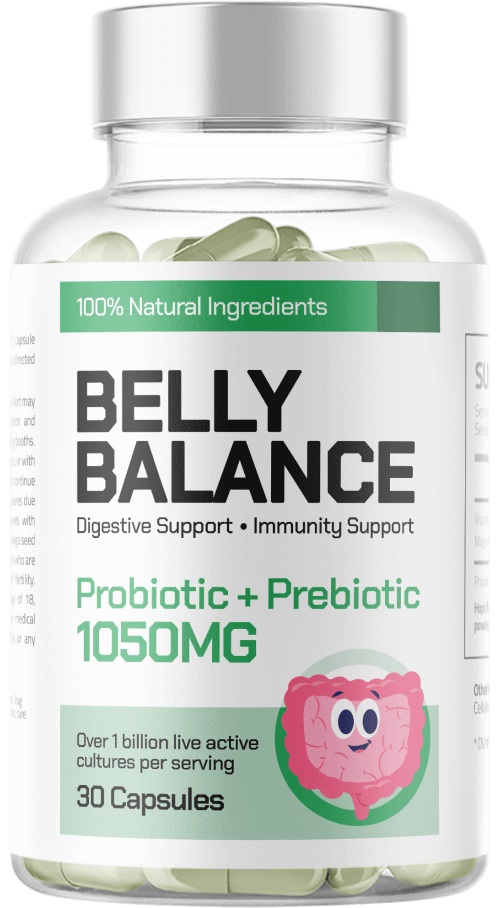
Why Belly Balance Works When Traditional Probiotics Fail?
You wake up with a flat stomach, put on your favorite pair of jeans, and feel light. By 3:00 PM, after a routine lunch, your midsection feels uncomfortably tight, visibly distended, and heavy. You try drinking more water, cutting out dairy, or sipping peppermint tea, but the cycle repeats itself tomorrow.
If this scenario sounds familiar, you are far from alone. Intestinal gas, postprandial bloating, and irregular motility affect over 20% of the global adult population. The health aisle is flooded with high-count probiotic capsules, synthetic fiber powders, and quick-fix detox teas promising instant relief. Yet, for millions of people, these generic solutions yield minimal results—or worse, actively aggravate abdominal distension.
The issue isn’t that probiotics don’t work; it’s that most commercial formulations ignore basic human gastrointestinal biochemistry. To fix chronic gut distress, a daily supplement must survive stomach acid, target mucosal inflammation, and provide the exact combination of digestive enzymes and prebiotic substrates needed for long-term bacterial colonization.
This is where Belly Balance distinguishes itself. By employing a multi-faceted synbiotic and enzymatic architecture, it addresses the structural root causes of microbial dysbiosis rather than merely masking daily symptoms.
The Anatomy of Dysbiosis: Why Modern Digestion Breaks Down
To understand why traditional approaches fail, we must first look at what goes wrong inside the human gastrointestinal (GI) tract.
The human gut harbors roughly 100 trillion microorganisms—a complex ecosystem heavily involved in metabolic regulation, immune modulation, and neurochemical synthesis. In a healthy microbiome, beneficial bacteria ferment dietary fibers to produce short-chain fatty acids (SCFAs)—primarily acetate, propionate, and butyrate. These fatty acids nourish the intestinal epithelium, strengthen cell-to-cell tight junctions, and regulate smooth motility.
However, modern lifestyle factors continuously disrupt this equilibrium:
- Dietary Emulsifiers & Ultra-Processed Foods: A seminal study published in Nature (Chassaing et al.) demonstrated that common food emulsifiers (such as carboxymethylcellulose and polysorbate-80) erode the protective mucin layer lining the gut. This allows bacteria to come into direct contact with epithelial cells, triggering systemic, low-grade inflammation.
- Artificial Sweeteners & Preservatives: Research in Cell indicates that non-caloric artificial sweeteners alter microbial metabolic pathways, favoring pathobionts that produce excess gas.
- Chronic Psychological Stress: Elevated cortisol levels increase intestinal permeability (“leaky gut”) and alter GI transit time, giving opportunistic bacteria time to ferment food prematurely in the small intestine.
When opportunistic bacteria overpower health-promoting strains, the body enters a state of microbial dysbiosis. These pathobionts rapidly ferment undigested carbohydrates, releasing excessive volumes of hydrogen ($H_2$), carbon dioxide ($CO_2$), and methane ($CH_4$) gases. The result is painful, visible abdominal distension.
The Delivery Problem: Why 90% of Standard Probiotics Fail
The standard consumer response to digestive discomfort is buying a probiotic with a “50 Billion CFU” label. However, high colony-forming unit (CFU) counts are largely marketing metrics if the bacteria never survive passage through the stomach.
The human stomach maintains an intensely acidic environment (pH 1.5 to 3.5) specifically designed to denature proteins and destroy ingested pathogens. Standard gelatin probiotic capsules dissolve in the stomach within minutes. The vast majority of delicate bacterial cultures are neutralized by hydrochloric acid and bile salts long before reaching the ileum or colon.
Furthermore, introducing live bacteria into a starved, inflamed gut without adequate substrate is like planting seeds in dry concrete; the microbes cannot establish colonies.
Belly Balance solves this through three integrated biochemical strategies:
- Targeted Strain Resilience: Formulated with human-origin, acid-tolerant strains capable of surviving gastric acid passage.
- Prebiotic Synergism: Pairing living cultures with non-digestible oligosaccharides that feed beneficial strains exclusively.
- Exogenous Enzymatic Cleavage: Pre-cleaving complex macromolecules in the upper GI tract to prevent abnormal fermentation further down.
Deconstructing the Science Behind Belly Balance
Let’s examine the specific physiological mechanisms driving the Belly Balance formulation:
1. Targeted Probiotic Strains (Lactobacillus & Bifidobacterium)
Lactobacillus acidophilus and Lactobacillus rhamnosus are primary colonizers of the small intestine. Research published in Frontiers in Microbiology demonstrates that L. rhamnosus secretes antimicrobial peptides (bacteriocins) that directly inhibit pathobionts like E. coli and Candida albicans. Furthermore, these strains upregulate the expression of key tight-junction proteins—specifically Claudin-1 and Occludin—rebuilding the physical intestinal barrier and preventing bacterial lipopolysaccharides (LPS) from entering the bloodstream.
In the colon, Bifidobacterium longum and Bifidobacterium animalis take precedence. These obligate anaerobes ferment specialized plant fibers to synthesize butyrate. A comprehensive review in Gastroenterology highlighted butyrate as the primary energy source for human colonocytes (colon wall cells). Butyrate maintains an anaerobic environment in the gut, which actively suppresses oxygen-loving pathogenic bacteria while stimulating anti-inflammatory T-regulatory ($T_{reg}$) cells.
2. Selective Prebiotic Matrices (Fructooligosaccharides / Inulin)
Probiotics require specific nourishment to survive initial colonization. Belly Balance incorporates precise doses of short-chain prebiotic fibers like fructooligosaccharides (FOS). Unlike starch or simple sugars, FOS possesses $\beta$-chemical bonds that human digestive enzymes cannot break down, allowing it to pass through the stomach and small intestine intact.
Once FOS reaches the large intestine, Bifidobacteria consume it through a process known as cross-feeding. This selective fermentation produces lactic and acetic acids, slightly lowering the luminal pH. This mildly acidic microenvironment promotes beneficial bacterial growth while rendering the habitat hostile to gas-producing pathogens.
3. Exogenous Digestive Enzymes
A crucial differentiator in Belly Balance is the inclusion of targeted digestive enzymes (including amylase, protease, lipase, and alpha-galactosidase).
When stress, aging, or low-grade inflammation impairs endogenous enzyme secretion from the pancreas, large molecules of proteins, fats, and fermentable carbohydrates (FODMAPs) pass undigested into the lower intestine. Opportunistic bacteria ferment these whole molecules, generating rapid gas accumulation and pulling water into the bowel via osmotic pressure.
By supplying exogenous enzymes, Belly Balance breaks these macronutrients down into absorbable amino acids, fatty acids, and simple sugars in the upper GI tract—depriving gas-producing bacteria of their fuel source.
The Gut-Brain & Gut-Immune Connection
Restoring gut equilibrium with Belly Balance yields systemic benefits that extend far beyond abdominal comfort:
[ Belly Balance Synbiotic Protocol ]
                 │
                 ▼
 ┌───────────────────────────────┐
 │ Reduces Mucosal Inflammation  │
 └───────────────┬───────────────┘
                 │
  ┌──────────────┴──────────────┐
  ▼                             ▼
┌─────────────────────────┐   ┌─────────────────────────┐
│ Enteric Nervous System  │   │ Gut-Associated Lymphoid │
│  (90% Serotonin Prod.)  │   │      Tissue (GALT)      │
└────────────┬────────────┘   └────────────┬────────────┘
             │                             │
             ▼                             ▼
 ┌───────────────────────┐     ┌───────────────────────┐
 │ Improved Mood, Sleep  │     │ Systemic Inflammation │
 │   & Mental Clarity    │     │   & Immune Defense    │
 └───────────────────────┘     └───────────────────────┘
- The Gut-Brain Axis: Approximately 90% of the body’s serotonin—a key neurotransmitter regulating mood, sleep, and intestinal peristalsis—is synthesized in the gut by specialized enterochromaffin cells. A landmark study in Cell confirmed that specific Bifidobacterium metabolites trigger these cells to produce serotonin. Users frequently report reduced brain fog, better stress management, and improved sleep quality after optimizing their microbiome.
- Systemic Immune Resilience: Roughly 70% of the body’s immune tissue resides in the Gut-Associated Lymphoid Tissue (GALT). By reinforcing the mucosal lining, Belly Balance prevents systemic translocation of bacterial toxins, cooling down low-grade systemic inflammation that often manifests as joint stiffness, skin flare-ups, and chronic fatigue.
Practical Protocol: How to Maximize Results
Re-establishing a healthy microbial ecosystem is a biological process that takes consistency and proper timing. Here is a science-backed protocol for integrating Belly Balance into your daily routine:
- Optimize Timing: Take Belly Balance approximately 15 to 20 minutes before your primary meal of the day with a large glass of room-temperature water. Taking it just before a meal helps buffer stomach acid, allowing active strains to pass into the intestines even faster while placing digestive enzymes in position for incoming food.
- Maintain Hydration: Prebiotic fibers rely on water to form a soft gel matrix within the digestive tract. Ensure an intake of 2.5 to 3 liters of water daily to support normal motility.
- Allow Time for Microbial Adaptation: Biological adaptation occurs in phases. During the first 3 to 7 days, subtle shifts in bowel habits may occur as healthy strains displace older bacterial colonies. By weeks two through four, as SCFA production increases and mucosal repair stabilizes, systemic benefits—such as a consistently flat stomach profile, stable daily energy, and total freedom from post-meal heaviness—become the baseline.
Persistent bloating, post-meal heaviness, and unpredictable digestion are not things you simply have to live with. They are functional signals that your internal ecosystem is out of balance. By combining acid-resilient probiotic strains, selective prebiotic fiber, and essential digestive enzymes, Belly Balance provides a biologically sound, evidence-based pathway back to lasting digestive comfort and daily vitality.
